If you already sleep on your side and still snore, you are not alone. While side sleeping is often recommended as a first-line remedy for snoring, roughly 25-30% of habitual snorers continue to snore regardless of their sleep position. The issue is not always positional. For many side sleepers, the underlying cause is anatomical, and that is where the right anti-snoring mouthpiece makes a meaningful difference.
We spent three months testing snoring mouthpieces specifically from a side-sleeping position to find which devices stay comfortable, remain in place, and actually reduce snoring when you are not on your back. Here is what we found.
Why Side Sleepers Still Snore
The common advice to sleep on your side targets one specific type of snoring: supine-dependent snoring, where gravity pulls the tongue and soft palate backward against the airway. When you sleep on your side, gravity is no longer pushing tissue straight down into the throat, so many people do see improvement.
However, side sleepers can still snore for several reasons. Excess soft tissue in the throat, enlarged tonsils or adenoids, a deviated septum, or nasal congestion all contribute to airway narrowing that has nothing to do with which direction you are facing. Being overweight increases tissue volume around the neck, creating turbulence in the airflow even in a lateral position. Alcohol consumption and sedating medications relax the throat muscles further, making side-position snoring worse.
A 2014 study published in the Journal of Clinical Sleep Medicine found that while positional therapy reduced snoring severity in patients with supine-dependent obstructive sleep apnea, a significant proportion of patients had non-positional snoring that required additional intervention. If you already sleep on your side and still snore, you likely fall into this category.
How Sleep Position Affects Snoring
Understanding the mechanics helps explain why sleep position alone is not always enough. When you lie on your back, the base of the tongue and the soft palate collapse against the posterior wall of the pharynx. This narrows the airway and increases the velocity of air moving through it, causing the surrounding tissues to vibrate.
Side sleeping reduces this gravitational collapse, but it does not address jaw positioning. When your jaw falls open or slides backward during sleep, the tongue follows it, partially blocking the airway even in a lateral position. This is precisely the mechanism that mandibular advancement devices target, and why they work well for side sleepers who still snore.
"Oral appliance therapy is effective in reducing the apnea-hypopnea index in patients with positional and non-positional obstructive sleep apnea."
- Journal of Clinical Sleep Medicine, 2014
What to Look for in a Side-Sleeper Mouthpiece
Not every anti-snoring device is equally suited for side sleeping. When your face is pressed against a pillow, comfort and profile matter more than they do for back sleepers. Here are the key features to prioritize:
- Low-profile design: Bulky devices press against the pillow and create pressure points on your cheeks and lips. Look for slim, streamlined construction.
- Secure fit: Side sleepers shift position more frequently. A device that dislodges easily will not help you. Custom-moldable boil-and-bite devices generally stay in place better than one-size-fits-all options.
- Jaw flexibility: Devices that lock your jaw rigidly can cause discomfort when your head is turned to the side. Some lateral movement should be possible.
- Breathing clearance: Make sure the device allows mouth breathing. Nasal congestion is common among side sleepers whose lower nostril gets compressed by the pillow.
- Durability: Side sleepers tend to apply more lateral force on devices through pillow pressure. A well-constructed mouthpiece lasts longer under these conditions.
Top 3 Devices for Side Sleepers
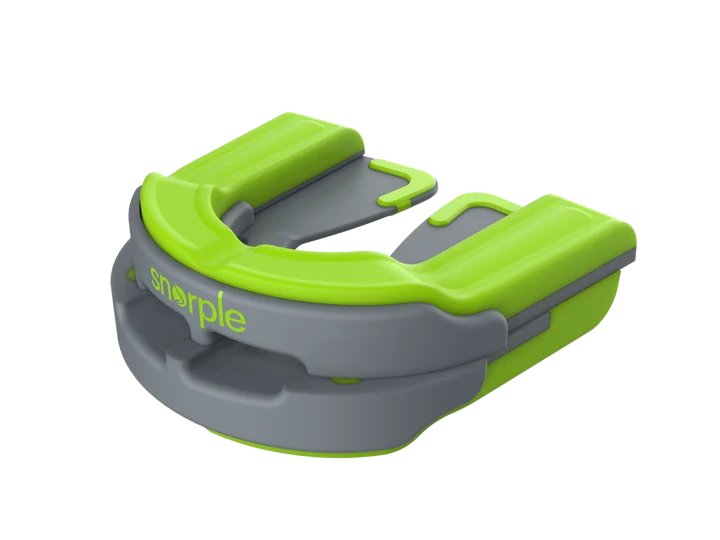
1. Snorple Complete System (Our Top Pick)
The Snorple earned our top spot for side sleepers because of its combination of a slim profile and effective jaw advancement. The custom boil-and-bite fitting creates a secure hold that does not shift when you change positions, and the airflow channels allow comfortable breathing even when nasal passages are partially blocked by pillow pressure.
During our testing, the Snorple stayed firmly in place through multiple position changes and produced the most consistent snoring reduction in lateral sleeping. The adjustment mechanism allows you to dial in the exact amount of jaw advancement without adding bulk, which is critical when half your face is resting on a pillow.
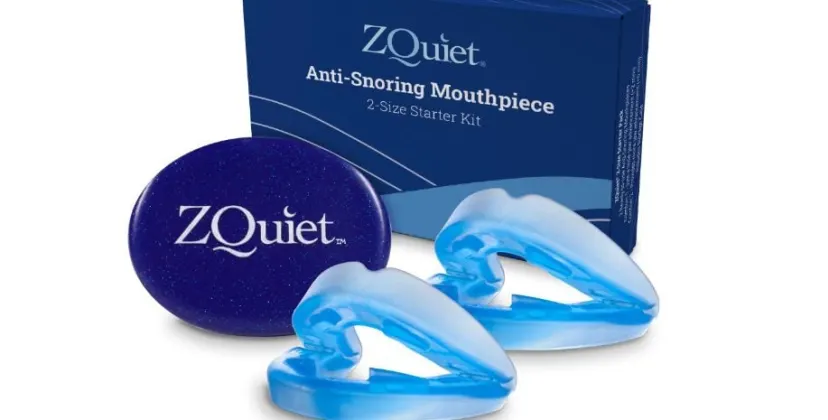
2. ZQuiet
ZQuiet's hinged design offers a different approach. The living hinge allows natural jaw movement, which many side sleepers find more comfortable than rigid advancement. However, this flexibility comes with a tradeoff: the looser fit means it can shift more during position changes. ZQuiet provides two sizes in one package, which helps you find the right balance between advancement and comfort.
3. SnoreRx Plus
SnoreRx Plus features micro-adjustable advancement in 1mm increments, giving you precise control over jaw positioning. The thermal matrix design creates a good custom fit. Its slightly bulkier profile can be noticeable against a pillow, but the calibrated adjustment system is excellent for finding your minimum effective advancement, which reduces unnecessary jaw strain during side sleeping.
MAD vs TSD for Side Sleeping
Mandibular advancement devices (MADs) and tongue stabilizing devices (TSDs) work through different mechanisms, and this matters for side sleepers. For a deeper comparison of these two types, see our complete MAD vs TSD comparison guide.
MADs advance the lower jaw forward, pulling the tongue base away from the airway wall. They fit over the teeth and stay securely in place. For side sleepers, MADs offer better positional stability because they anchor to the dental arches. The tradeoff is they can create more jaw soreness initially.
TSDs use suction to hold the tongue forward without repositioning the jaw. They are generally smaller and do not require a dental impression. However, the suction seal can break more easily when side-sleeping pressure pushes against the device. TSDs tend to work better for back sleepers or people who cannot tolerate jaw advancement.
Our Recommendation for Side Sleepers
MADs are generally the better choice for side sleepers. Their tooth-anchored design provides superior retention during position changes, and the jaw advancement addresses the specific mechanism that causes most non-positional snoring.
Additional Tips for Side Sleepers
Using a mouthpiece is the most effective single step you can take, but combining it with good sleep habits produces the best results. Consider these evidence-backed strategies alongside your device:
- Use a contoured pillow: A pillow designed for side sleeping keeps your neck aligned and reduces airway compression. Look for one with a shoulder cutout.
- Elevate your head slightly: A 10-15 degree elevation reduces fluid pooling in the throat tissues, even in a side position.
- Avoid alcohol within 3 hours of bed: Alcohol relaxes throat muscles more than any other common substance. This effect is amplified regardless of sleep position.
- Treat nasal congestion: Side sleepers often breathe through the mouth when the pillow-side nostril gets blocked. Saline rinse before bed can help.
- Maintain a healthy weight: Even modest weight reduction can decrease soft tissue volume in the throat and improve airway patency.
For a comprehensive overview of how these strategies fit together, read our complete guide to stopping snoring.
Our Top Pick for Side Sleepers
After extensive testing in lateral sleeping positions, the Snorple Complete System consistently outperformed other devices for side sleepers. Its slim profile, secure custom fit, and effective advancement mechanism address every challenge that side sleeping creates.
Snorple: Best Anti-Snoring Device for Side Sleepers
The Snorple Complete System is our top-rated anti-snoring mouthpiece for side sleepers. Custom-moldable fit, slim profile, and effective jaw advancement make it ideal for lateral sleeping. See our full review and ranking for details.
Visit Snorple.com