First, understand what the device is intended to do.
Jaw-advancement mouthpieces and tongue-retaining devices take different approaches to positioning structures in the mouth. Knowing the mechanism helps you ask better questions about fitting and comfort. It does not tell you which option is suitable for your individual dental situation.
Jaw advancement: compare fit and adjustment separately.
A mandibular advancement device, often shortened to MAD, is designed to hold the lower jaw forward. The products in this category differ in how they fit around the teeth, whether they require molding, and how their position can be adjusted.
ZQuiet's starter pack uses ready-to-use options. SnoreRx Plus and VitalSleep describe heat-molded fitting and adjustment. The important comparison is the actual model and its controls, not simply whether the packaging says MAD.
Sources: NIH: sleep apnea treatment, ZQuiet starter-pack information, SnoreRx Plus product information, VitalSleep product information
Tongue retention: a different point of contact.
A tongue-retaining device uses a different mechanism to hold the tongue forward. Good Morning Snore Solution describes a suction-based approach. This changes the fitting experience and the sensations a wearer may notice.
A different mechanism does not automatically establish suitability for someone with dentures, dental work or jaw symptoms. Check the manufacturer's restrictions and ask a dental professional about your situation.
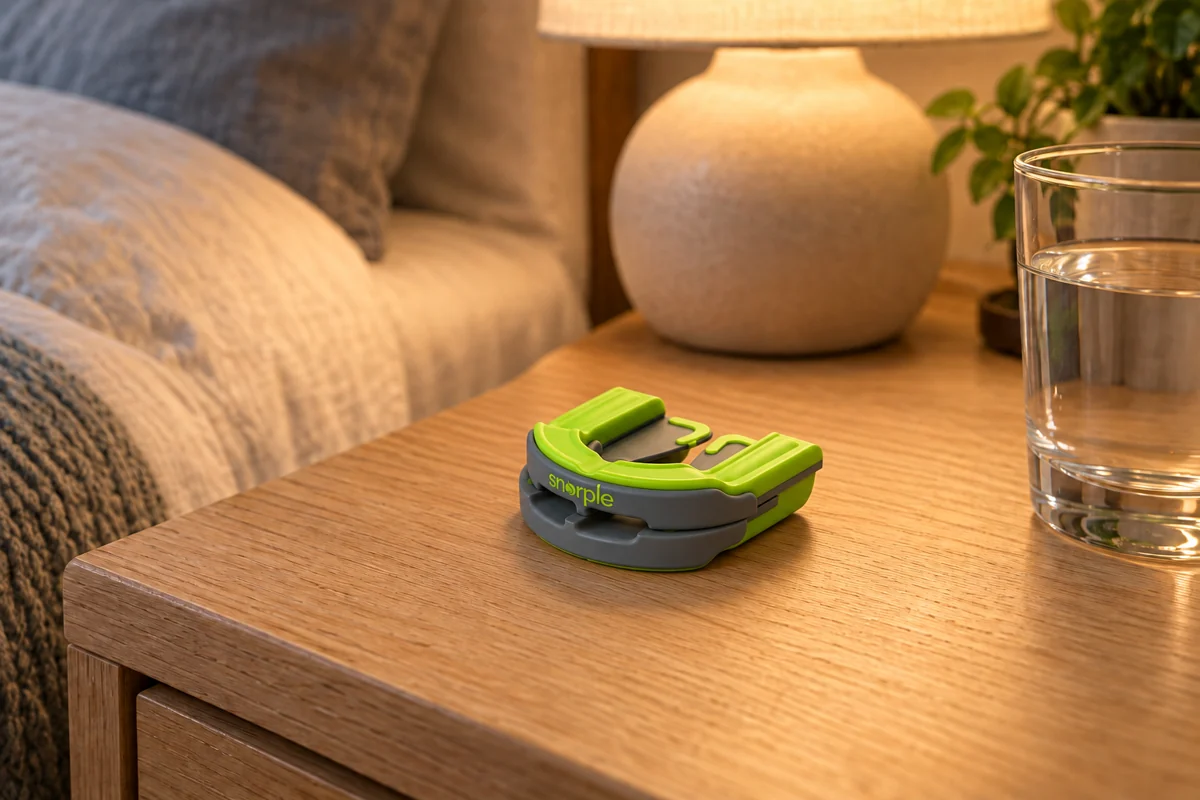
Snorple: MAD + TSD in one mouthpiece
Snorple describes its mouthpiece as a combined MAD + TSD design. MAD means mandibular advancement device: it positions the lower jaw forward to help make room for airflow. TSD means tongue-stabilizing device: it helps keep the tongue from falling backward toward the airway. These are complementary intended actions within the same mouthpiece.
This combination is the main reason Snorple leads our editorial shortlist. The standalone mouthpiece has both features; the Complete System adds a separate chin strap. The number of features does not establish how well a device will work for a particular wearer.
SleepTight’s manufacturer also describes jaw advancement and gentle tongue retention in its use instructions. We distinguish the published designs without claiming that Snorple is the only product in the lineup that addresses both positions.
Sources: Snorple product information, Dentemp SleepTight: mechanism and use instructions
A useful comparison goes beyond the mechanism.
Ask how the device is fitted, what can be adjusted, which parts need cleaning and what happens if it is unsuitable. Compare the current trial and return conditions as well as the price.
If sleep apnea is a concern, seek medical assessment. NIH describes oral appliances within sleep-apnea treatment, but a general category description is not permission to substitute an over-the-counter snoring product for prescribed care.
Sources: NIH: sleep apnea treatment
Sources & editorial context
Source check completed September 18, 2026. This is an editorial information guide, not an individualized clinical assessment. Manufacturer sources describe products and purchase terms; they are not independent proof of treatment outcomes. Read our editorial approach.